A friend wrote this to me after I told him that I failed three times at a particular event. I was impressed, mainly because he used baseball to illustrate his point. Thanks, friend. You know who you are.
You entered the ballpark, stepped down from the pavilion into the ballpark.
It is comfortable in the pavilion, amongst the opinionated crowd, but you dared to step onto the field, pick up a bat and take a swing. Stepping onto the plate means facing highspeed baseballs, and with each pitch comes with it, uncertain opportunity.
You will swing the bat. Some you will nick, on others you will walk, but all of us will probably miss more than we’d like to admit. But it is only by standing there and facing every pitch, bursting with opportunity, rife with uncertainty, that you will be ready to hit that one baseball. Right on the sweet spot. Past the fielders, over the crowd, and out of the ballpark.
Home run.
But until then, keep facing those pitches. Adjust your feet. Correct your grip. Anticipate the pitch. Loosen up. Focus. Swing that bat with all you have.
You are in the field, and it only happens on the field. Swing away.
Working from home can be a dream. It can also be very challenging. Since the world seems to be adopting a work from home mindset, I wanted to share some tips on how to stay productive while working from home that I have found helpful over the years.
Take Time to Prepare
When working from home, you must prepare for the day ahead. You don’t want to be caught like a deer in headlights when your alarm clock rings. Think about it. You are working from ‘home.’ Your home is a place of rest, relaxation, and distractions. Generally speaking, a home is not a place designed for maximum deep work and productivity – it’s a jungle.
Now that we have established that our homes are a minefield of personal and professional obstacles, it is easy to see why having a plan going into your day is so important.
Start planning a day in advance
Take some time at the end of your workday. Look through the tasks of the day and check off everything that you have accomplished. Now it’s time to make a new list. Write down a list of everything that you would like to do tomorrow. Make sure to include any tasks that you didn’t get around to during the day.
With your list more or less completed, take a moment and think about what your day is going to looks like tomorrow. If you’d like, you can stack this process with another good habit of cleaning your desk (more on this in the next step). While thinking about the next day, you may find you need to consult with a team lead or partner. Check-in with them to see if there is anything that they might require you to do. Maybe you need to run an errand for a spouse, meet with a potential client, or start dinner a little earlier. You should have a compiled list of tasks at this point, and already a clearer picture of what the next day would look like.
Grab the Calender
Take your list and sit down with your calendar. At this point, you want to try to visualize your day as best as possible. This process is not supposed to be perfect, but rather a rough outline of your day. Try to be realistic with the time it takes to complete tasks. Give yourself some leeway, and don’t expect a robot-like performance from yourself. Again, be realistic.
Develop a Routine
Similar to planning your day, a routine is there to help define boundaries for your home and office. Do you remember a time when you worked a job at an office? Chances are you had to be out of bed at a specific time; you performed a particular set of tasks to get ready and have some commute before arriving to work. While those things may have seemed like a drag at the time, they were helping you to get available for work.
Once we get into the flow of a routine, often, it may seem like we are in auto-pilot mode. Slowly drifting along until arriving at our destination. A routine helps prime your brain and body for the next event. Once a set of tasks are completed, like waking up, brushing your teeth, and driving to work, your brain is ready to do the next event – usually, work.
Because we work from home, you might find it a bit difficult to have a set routine. Each day is different because we are privileged (and cursed) enough to have flexibility. If you just roll out of bed and open your laptop on Monday, but only start working in the afternoon on Tuesday, you might have a difficult time trying to focus or getting in the zone when it’s time to work.
Start-Up Routine
Try to set up a simple start-up routine to get into the swing of things. You have the freedom to set this routine and start at any time that best suits you. A start-up routine doesn’t have to be time-consuming, complex, and cumbersome.
I am currently trying a simple routine. When I am ready to start work (which is usually more or less the same time every morning), I head out the front door for a quick 10-minute walk around my neighborhood. When I get back home, I put on some coffee and wait for it to brew while casually browsing my phone. After the coffee is ready, I pour a cup for myself and my wife and head to the office. As you can see, this is almost mimicking a commute along with grabbing a coffee before sitting down to work. I find that a 10-minute break to be alone and outside helps re-align my thoughts. It also adds some distance from myself and my home. It allows me to refresh my brain, ready to take on the workday ahead.
Shutdown Routine
Similar to the start-up routine, the shutdown routine happens at the end of your day. When you’re ready to “Pack up” and go home, I’ll admit, some days, I rush out my home office and into the kitchen. But ideally, I like to first close all my browser tabs and apps on my computer. Start making a list of to-do’s for the next day, and clean my desk. If I am feeling like a groggy-zombie, I like heading outside to get some fresh air or take a quick walk around the block to clear my head.
When I get back home, my brain has been reset and I am ready to spend time with my family.
Take a Breather
Have you ever had a friend jealously ask you about your workday? Maybe they begrudgingly scuff at the thought of you doing an hour of work while the rest of your day is spent lounging around?
This could not be farther from the truth, at least in my experience. As a remote worker, I find it incredibly easy to sit in front of my computer for a copious amount of hours at a time – not a good idea.
Try taking regular breaks. While this may sound easy, it is pretty tricky to put into practice. Frequent breaks are essential to staying productive while working at home. Your body needs it, and you might find that you perform better by taking these small but frequent breathers—bonus points for having your break outside.
Work to Your Strengths.
The beauty of working from home is that you have the power of flexibility at your disposal. Mostly, as long as you can get your work done promptly, companies don’t mind when and how you get your job done.
If you’re an early bird, go ahead and get started nice and early. Prefer to take on your tasks like a cape crusader in the night? Why not? You might need to clarify this with your team leader, but if they say it’s all good, you’re ready to roll – whatever time suits you best.
I prefer to work later in the day or even at night. My family dynamics, however, have me working closer to a standard 9 to 5 office hours kind of deal.
Work to your strengths. You have the power to leverage your natural productive abilities when you feel most productive.
Try Journaling
I would love to be more consistent in this regard, but I find journalling a great tool to stay productive while working from home. Journaling no matter how simple is fantastic at developing one’s self-awareness muscles. This self-awareness comes in handy when you need to realign a routine. Speak up in a meeting or know when to take a break (or push a little bit harder).
Bullet Journal
I use a simple Bullet Journal method that helps me record my day’s tasks, organize my thoughts, and take note of new ideas. My bullet journal is also my anchor. If I am working, it is right by my side, ready to be flipped through and scribbled in at a moment’s notice.
There are a lot of different journaling methods that can boost productivity, creativity, and personal development. I use the Bullet Journal system, but I’d encourage you to find a journaling method that best suits you.
Here are some tips to help you get started journalling:
Don’t think you need to write pages of words a day. A simple sentence can be considered a journal entry.
Analog systems are incredibly satisfying to use, but your journal can be digital. There are loads of apps out there to try. If you use Mac or IOS, why not give Apple Notes a go?
Start simple or get creative. It’s your notebook. Do with it as you will.
Watch some Youtube tutorials on journalling. There are loads of ideas out there, and don’t be ashamed to copy someone else’s system. Chances are you will develop your system over time. I use the ‘Perfect Day’ system that I created myself. Let me know if you’d like me to write more about it.
No matter how small, go ahead, and start. You can stop anytime you want if you feel that after a few days or weeks that it’s not for you.
Give Yourself a Break.
To end this article, I want to leave you with one last piece of advice. When times get tough, don’t be too hard on yourself. You will have the best intentions of making the most out of your day but it will fail. Life happens. and seemingly more so when you work from home.
When this happens, try your best to recover your day as best as you can. Don’t beat yourself up. Dust yourself off and try again tomorrow. It’s going to happen, and it happens to us all who already work from home. Staying productive while working from home is tough – but you’re tougher. Get it done.
There are a variety of resources out there providing help for freelancers on how to get freelance work. When I was a freelancer, I would often visit these blogs and watch these videos. And while I did find some helpful hints, I was often left feeling unsure of what to do next. While there are certainly a lot of things you can try to get more freelance work, I want to give you a tip that I used to get my freelance career rolling.
How to Get Freelance Work
Seek Out Low Hanging Fruit
When starting, new work is tough to come by. Converting someone who hardly knows about you into a paying client is a lot of hard work. You have to win their trust, provide evidence of your competency, and convince them to hand you their hard-earned cash.
Many freelancers get stuck on seeking out work through cold calling and other lead generation technics. It is enough to send any freelancer who is just starting, running for the hills.
Look a little closer.
You don’t have to go to the ends of the Earth to find your first client. Instead, reach out to the people closest to you. See if there is anyone who would benefit from your services.
Try reaching out to these people to start with:
Friends
Family
Work Colleagues
Your community
Businesses
Make a List
Go ahead and make a list of all the people you know. Do any of them own a business? Does anyone work for a non-profit organization? Lead a community? Even if none come to mind. Make a list of everyone. You might be surprised at the number of people who could benefit from your services.
It might be a good idea to write to anyone else that might come to mind during this process even if you do not know them personally. Do you have a friend who is a friend with a business owner? Ask her to introduce her friend to you. Let them know upfront if you plan to talk to them. You can also ask to join any activities where you might naturally meet with this person. Keep things natural, and don’t try to force your way on anybody. Be genuine. People can sense when someone has an alter motive.
Transparency and authenticity go a long way.
Reach out
Now that you have your list of potential customers. It is time to reach out to them. Since you already know these people, you should be able to quickly get in touch with them and let them know about your new freelance business.
The beautiful thing about communicating with people that you already know is that they will be a lot more willing to listen to what you have to say.
Offer Your Services
Once you have made contact, it is time to offer the person your services. You can provide a service to them for free or charge an affordable fee. Keep in mind; you want to give them value. It is not the time to make ‘big bucks’ off of your dear old pal.
Do good work.
Hopefully, an opportunity will arise for you to do some work for a person you care about or a project that resonates with you. Put everything you can into the project but don’t go into significant debt or become bankrupt in the process. Just try hard to do a good job.
If you have done your best, your associate might love their new website or logo and tell their friends. Hopefully, their friends will ask for your services too. Perhaps, they have even more friends who could benefit from your excellent skills.
And so the word of mouth marketing campaign goes. Let someone know what you’re doing. Offer your customers an incredible amount of value. Repeat.
Caution
Offering value, helping friends and family are great. But be careful not to allow others to take advantage of you. You are a person — a professional. You can’t work for free all the time. There are bills to be paid and a life that needs living. ‘Exposure’ can only get you so far. Don’t let anyone deceive you by getting services out of you for ‘exposure.’
Here are some tips to help ensure that you protect yourself, your relationship, and your client:
Ensure that everyone knows and agrees on the scope of the work — see point #1
Request a 50% deposit upfront.
The customer must pay the remaining 50% before the project completion.
Avoid the job if you sense the project will put a strain on the relationship.
Stay in Touch
I hope you found this article on how to get freelance work useful. Let me know if there is anything that I missed by commenting down below. More resources are coming soon. View my blog for details. Subscribe to my newsletter for more freelancer tips.
“We are what we do repeatedly. Excellence then, is not an act, but a habit” – Some book. Read by some guy on YouTube.
In order to do things, to live life to the full, to move forward. We need to do just that, move forward. Little by little, day by day. “We are what we do.”, “Repeatedly.”, these are some of the simplest and most thought-provoking words I have ever read.
Whatever you want to do with your life. Break down the biggest part of it into little, habit-like tasks that you can do daily. Here are some that I am currently doing.
Learn Norwegian – 1 or 2 Duolingo lessons per day.
Run like a champ – Aside from my cycling and weight training every now and then, I run pretty much every day. Even if it is just one kilometer.
Read more books – A couple of pages each day, either in the morning or just before bed.
Learn to Code – I aim to do a couple of lessons per day with FreeCodeCamp (working my way towards becoming a Frontend Developer).
Blog more – aside from this last four weeks I usually aim to push out a blog at least once a week, why? I want to practice writing, sharing and communicating and you should too! Start your blog today.
Design – this one is a new one. I plan to design or create something daily. No need to spend hours doing so, just find something simple online and recreate it. Will start this tomorrow. I think I will start practicing my illustration techniques 🙂
It doesn’t help if we climb halfway up the mountain in a day and remain there. It is far better to climb it one step at a time daily but reach the top.
Side note, if you can sprint up the mountain and stay there, well, then.. Well done!
Believe it or not. It does not come naturally to want to wake up early, get dressed and go for a run in the early hours of the morning. Especially weekends. For fun. I know…
As an adult, there comes a point in your life where you want to improve your overall health. Maybe you want to lose a couple of pounds or just stop getting winded climbing a few stairs. Whatever the case, here are a couple of tips that helped me become one of those early rising, active types. Trust me, this was not always the case.
Start small – not that long ago a victory for me, consisted of waking up and going to the gym. Even if it meant walking at a snail pace for 10 minutes on the treadmill or even just sitting, reading a book in the gym lobby waiting for my friend to finish training.As time goes on, increase the intensity, speed, weight or length of the activity you have chosen. If you are like me (a millennial) you have to fight the urge to want to become a triathlete, overnight, just because you thought it would be or look cool. One training session will not result in your looking like The Rock or taking on the Tour de France.
Be consistent – Slow and steady wins the race. Walking every single morning for 20 minutes for a month is better than running a 5km once a month.
You cannot out-train poor nutrition – Surprise, surprise. No matter what activity you are doing. Try running a car on mud and it will break down.
Find a gym buddy or running partner – find someone who you enjoy being around, someone who is in better shape than you and can help push you past the point of what you think is possible. Remember, we become like those we associate ourselves with. Unless you are really self-driven and disciplined, I would say having a gym buddy is vital. I would often throw myself out of bed in a spin at 5 am running out the door to go train. Just because I knew my training partner was downstairs in the car waiting for me.
Find a diet, eating plan, lifestyle (eating method) that works for you– Keep trying until you find something that works for you, you can keep it up long-term and it doesn’t make miserable. Slow and Steady. We in this thing for the long haul. What worked for me was intermittent fasting – OMAD (one meal a day)
Do something that you like – try to find an activity that you like. I hated going to the gym and running. So I would cycle, walk and play squash because I found those to be a lot of fun. After 45 minutes of any of those activities, I would be dead tired, sweaty but had a smile on my face.Now that I am fitter, I actually like running (and gym), I feel better about myself, and can run for more than 2 minutes (not kidding) before it feels like my legs were going to break right under me.
Doing something (even the tiniest amount) is FAR BETTER than NOTHING – I know this is basically point #1 coming up again but it is true. You might be tempted to think that if you can’t get out of bed and run for 20km, there is no point. This is false (thanks Dwight). Keep at it. Waking up turns into walking. Walking to jogging. Jogging to running. Before you know it, you are finishing races and waking up early on a Saturday to go running and there is nothing else you would rather be doing. Not even sleeping.
On Saturday, June 3rd, I partook in an urban mountain bike race around Johannesburg which included riding through stormwater drains, climbing man-made scaffold bridges, navigating mountainous rocky patways and blindly cycling through dark underground tunnels.
Early morning – Race starting line
The course was 72km (45 miles) long and was very tough. I do not think I was fully prepared for what lay ahead (considering I was close to being one of the last to cross the finish line and around 3hrs behind the race leader) but I know I did the best I could with the time and resources I had and you know what? I did it. I finished the race.
Gareth and myself – waiting for the race to begin.
I completed the race in 06:03:27 and couldn’t be happier. This was the furthermost distance and longest time spent on my bike in one sitting. Funny enough, the following day I was a lot less sore than what I thought I would be. The next day I experienced mild discomfort in my shoulders, neck, and traps. This was from being hunched over in one spot for several hours.
It was a long race and would put my body, mind, and training to the test. Going into the race, I kept experiencing nagging thoughts of wanting to ‘know’ that I could ‘definitely’ finish the race. But even when being faced with the “3,2,1” countdown to the race start, I had no evidence that I would be able to conquer the figurative and literal mountain in front of me.
32km Check-in – Feeling great. We just passed through some large stormwater drains.
During the race, there were many times where I had to talk myself down from thoughts of quitting and giving up. Through burning thighs, an aching back and lungs aflame I had to keep going. There was work to be done and no time to complain.
Gareth and I, at the finish line with our Punisher medalsI love moments in life like these. Moments where you do something that should not have been possible. Moments like these are very addictive. We humans, love progress. Defying the odds. Being the underdogs. Sticking it to the ‘man’ etc. Whatever you call it, it is deeply satisfying to conquer these mountains and inevitably move on to the next challenge to overcome (next up – 94.7 Challenge).
Whose with me?!
Trav’s Tips for taking the challenge and completing it.
Don’t give yourself a chance to escape. Register for the event, buy the ticket, say yes!
Do not wait to see if you are ready for it. Decide to do it and then start preparing. You can spend weeks debating whether or not to do the challenge and it could have been spent training and getting ready. Trust me, this was my major downfall with the 2017 Bealieu 45km MTB challenge (which was much harder because I decided to do the race the morning of the event).
Get a Partner to do it with you. Look for someone who can support and push you through it. This was vital for me – thanks Gary!
Physically prepare yourself and get sufficient training. You will honestly stand on the start line feeling like you could have done more. You probably could have, but you’re here now and it’s ‘Go Time’. Forget about the “Maybes” and “What ifs” and go for it.
Get ready – mentally. Build some mental toughness. Be realistic with yourself and the challenge ahead. Even though I diligently trained my body and ate clean, the day before the race I kept repeating “It won’t be easy but you will do it”. I was right.
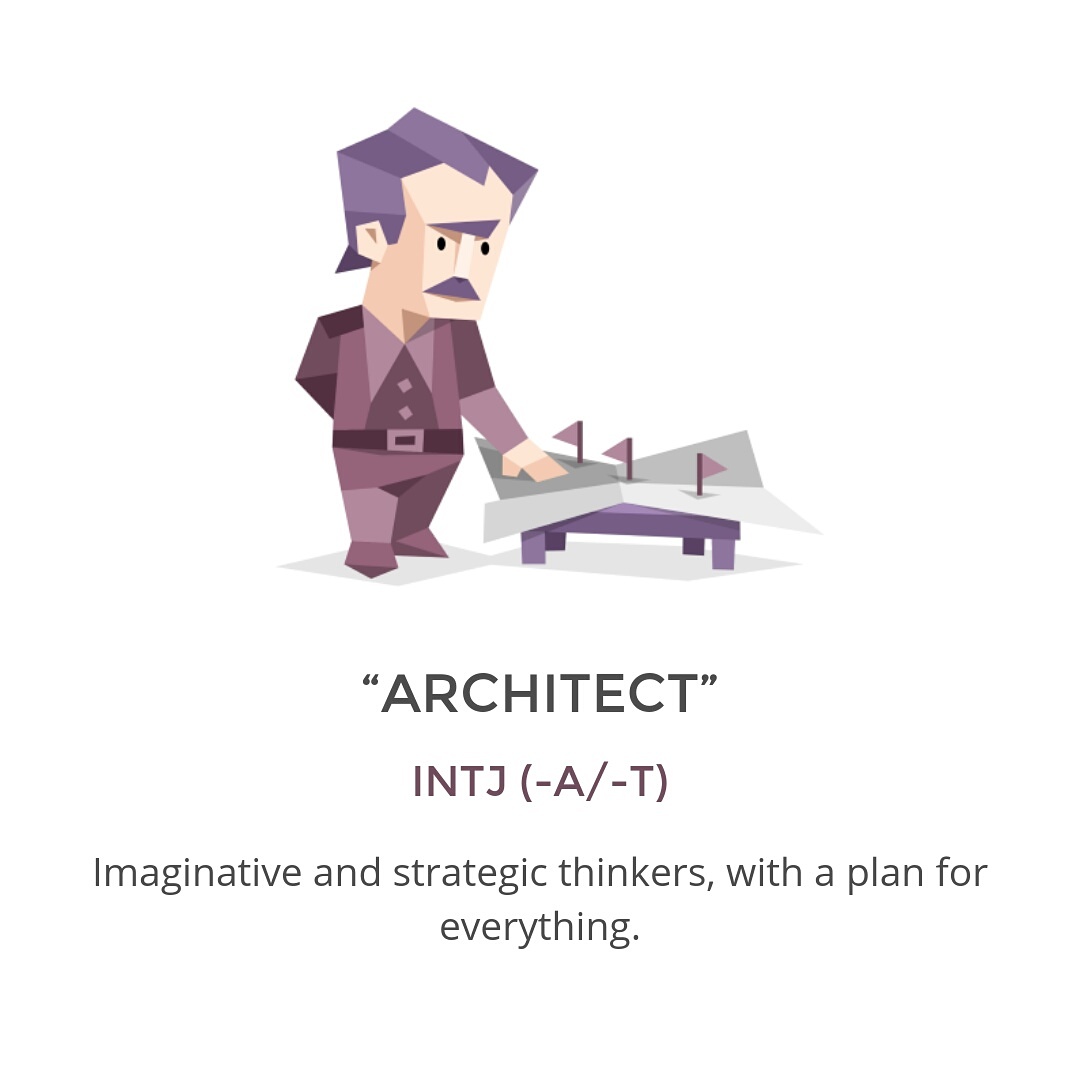
There is a website. You answer a bunch of questions (try to be as honest with yourself as possible – even if you do not like the answer) and the website crunches the numbers and churns out one of sixteen personalities you closely relate to.
I did my test twice so it must be true, right? Anyway, why not give it a spin and let me know what personality you have, down in the comment section below.
This coming weekend (Sunday) I will partake in a 72km Mountain Bike Race. I have been Mountain Biking on and off for about a year now but I have never ridden 72km in a single sitting (most has been 45km).
I have trained for the past month two weeks (due to the flu) as well as I could and have tried my best to be as prepared as possible for this punishing task ahead of me. I used the word “punishing” because by completing the 72km race you will, in fact, get a Punisher T-shirt.
I have only ever entered into one other race before this (45km) and it broke me. Partly because I registered at literally the last minute, hadn’t trained at all for the race and worked very physically the day before to the point of bodily fatigue and stiffness resulting the day of the race. Not very smart approach.
Me, changing a tire (for the first time ever) while out training on a technical trail this past weekend. Preparing for the 72km race. Mission was successful.
At the end of that race, I was exhausted and broken but, I did it. I felt so amazing that I finished it and conquered this beast. Sure, it was dumb and FOMO is a real thing, but I did it. I pushed myself. This resulted in some major mental mountains and strongholds to come crashing down. Ultimately, I grew. I progressed. This was one of the best moments in my life.
Now the time has come to push myself once more to do something I have never done before. It helps to surround yourself with others who help push yourself (thanks Gareth), without them, you might never get up and do anything. Or anything that matters. Pushing myself and going beyond what I thought was possible for me has been one of the biggest aspects of progress in my life that helped me combat severe episodes of Panic and Anxiety (something which has been a huge deal to me for 2 decades).
I think it is good to throw yourself into things like this because you need to break down these mental thought castles that restrict and weigh you down. Maybe this is not a must, but it is healthy to do in my opinion. It also opens up new and exciting opportunities that would have never come up if you hadn’t said yes to life.
I believe that it is also good to not always seek out comfort and put yourself in things that make you feel downright uncomfortable. Call it Stoicism, being AntiFragile or just plain sucking it up and getting on with it.
I have seen with preparation for this race that you never feel quite ready for it. You want things of value to come to you and you want it to come easily. No struggle, no pain, no work and no discomfort (I am a millennial after all).
This is exactly why I registered for something that I cannot say with 100% certainty that I can achieve. What I can say is that I will give it my all, I will do my best. I will push myself.
It is really, really easy to over complicate things. Even when it comes to getting things done. This last year I was able to get the ball rolling on a lot of personal goals some big, some small and I was making some great progress too!
Hmm, progress…
Progress is something that makes me happy, so a good few months back I started reading more, journaling and watching videos on how to do things better, quicker and load more tasks on my plate because of my efforts.
It was around this same time that I started noticing that I was not able to get as much done as I wanted to and my progress sort of stalled, in almost all areas of my personal development journey.
The reason?
Well, I think it has to do with overcomplicating things and although books and media are really a great way to motivate and educate yourself. I found myself thinking more, doing less. Then I took a look at what lead to my previous stretch of progress and how to return to that state. Admittedly it was a particular motivational video (I know, ironic) that lead me to my “Aha” moment.
Solution.
Go back to the basics. When I was making the most progress in my endeavors§ was when I simply showed up and did something small that lead me to my ultimate goal.
For example:
Goal: Be ‘day to day’ fluent in Norwegian
Action: Do one Duolingo lesson every day.
This should take no longer than 5-10 minutes at most.
This was easy enough for me to consistently do for over 230 days (incl. weekends) Best Progress Results
New Commitment.
Goal: Be ‘day to day’ fluent in Norwegian.
Action: Study Norwegian every day for 1 hour. Break up the hour session into different lessons that include conversing, reading, writing and watching something in Norwegian. Lowest Progress Results
No doubt about it, option 2 would yield substantially better results. If I was able to accomplish this intricate regime I set for myself. Mix this regime in with having a busy schedule, family, work and quite a few more goals I have set for myself like: Follow a strict eating plan, Read a certain amount of pages per day, cycle/gym a certain amount every day, Code an hour a day etc, is a recipe for having too many ‘well-meaning things to do’ on your plate. Getting overwhelmed and ending up doing none of them.
Back to Basic. Do. Even if it is a little.
There is nothing wrong with pushing yourself and ‘increasing the bar’ on your goals, but something that I have come to learn is that taking some form of action of your goal every day for 5 minutes(or less) is far better than having done nothing at all.




 Travis Lima